Hospitals gain the advantages of liquid chromatography through the precise surveillance of patient's chemical composition and drug concentrations, among other things. The device is capable of separating the different substances with high efficiency, which ensures the delivery of reliable analytical data even if the biological sample is complex. The lab personnel are using liquid chromatography for the purpose of continual quality monitoring, which helps in dosage adjustment and patient care. Its accuracy simultaneously supports clinical decision-making as well as research studies, which leads to the laboratories having a versatile and trustworthy analytical platform that can meet the requirements of the healthcare sector and improve the outcomes for the patients.

liquid chromatography allows the personnel of hospitals and laboratories to keep an eye on the presence of environmental pollutants in sterile drugs. It purifies and recognizes the remaining solvents, preservatives, and other possible impurities thus, confirming safety and meeting the requirements of regulatory authorities. This technology is vital in the battle against exposing patients to toxic agents.
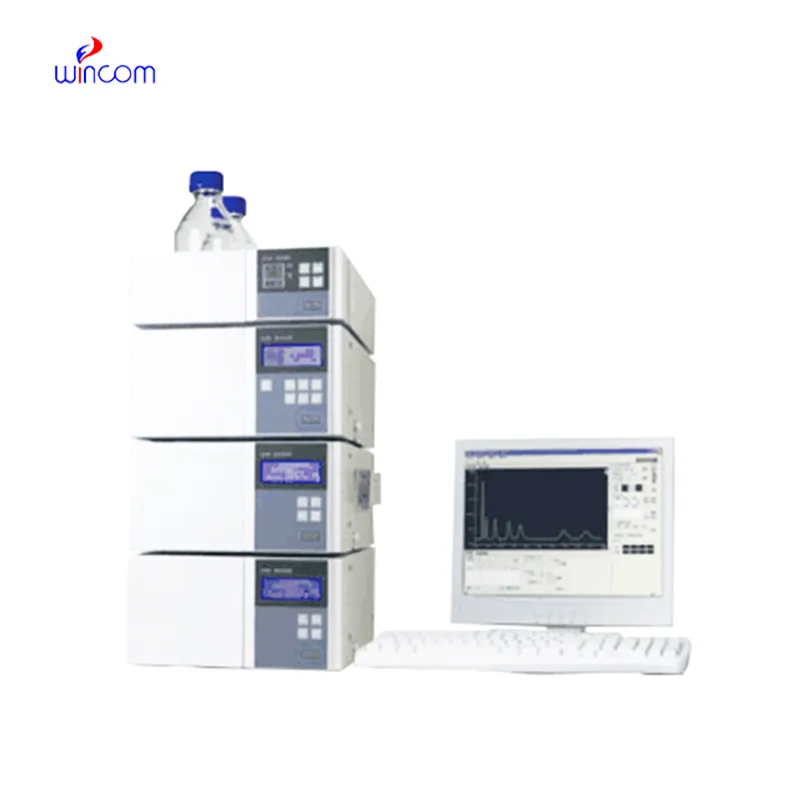
The liquid chromatography scenario predicted for hospital labs is all about the automated sample handling systems and the digital data analysis. Cutting-edge detectors along with AI-based interpretation are going to double the accuracy and the amount of the processed samples. All this will lead to major hospitals using liquid chromatography more and more for fast testing of patients, monitoring of treatments, and, with the help of research, unlocking the potential of their individual patients thus making medicine less and lab work more efficient.

Systematic cleaning, pressure monitoring, and timely worn parts replacement are among the measures to be taken in the hospital laboratories to keep liquid chromatography under control. Laboratory staff must ensure the observance of the suggested operating conditions, avoid the formation of air bubbles in the system, and check for proper solvent compatibility. Regular maintenance maintains the performance of the column, avoids contamination, and allows the analysis to be precise and reproducible, thereby benefiting not only routine patient testing but also experimental research.
liquid chromatography is equipped with an in-depth examination of biomolecules like proteins, peptides, and nucleic acids. Reversed-phase, ion-exchange, and size-exclusion chromatography methods qualify scientists to get insight into the molecular properties with utmost accuracy. The application of liquid chromatography in metabolomics studies, enzyme kinetics, and protein characterization helps in high accuracy and reproducibility. The high sensitivity level helps to detect low-molecular-weight molecules in detail and get insight into biological samples at a high level. One of the prime reasons why scientists are interested in liquid chromatography is its ability to generate information that advances understanding at an advanced biochemistry level.
Q: What is the sample preparation for HPLC? A: For the most part, samples should be filtered, diluted, or subjected to solvent extraction in order to avoid column clogs and have the results be accurate Q: Is HPLC able to pick trace-level compounds? A: With the right detectors, it can pick up such substances in extremely small amounts with high sensitivity. Q: Is HPLC a method that can be applied to analysis of proteins? A: Yes, particularly if one employs size-exclusion and reversed-phase columns for protein, peptide, and biomolecule separation. Q: What is the process of calibrating HPLC? A: The process is done by taking standards of known concentrations that are the same as the one in the sample and using them to check the performance of the column and the accuracy of the detector. Q: Are particular solvents needed for HPLC? A: Yes, the solvents used need to be compatible with the type of the column and the detectors to prevent any damage or interference in the analysis process.
We’ve been using this mri machine for several months, and the image clarity is excellent. It’s reliable and easy for our team to operate.
This ultrasound scanner has truly improved our workflow. The image resolution and portability make it a great addition to our clinic.
To protect the privacy of our buyers, only public service email domains like Gmail, Yahoo, and MSN will be displayed. Additionally, only a limited portion of the inquiry content will be shown.
I’m looking to purchase several microscopes for a research lab. Please let me know the price list ...
We are planning to upgrade our imaging department and would like more information on your mri machin...
E-mail: [email protected]
Tel: +86-731-84176622
+86-731-84136655
Address: Rm.1507,Xinsancheng Plaza. No.58, Renmin Road(E),Changsha,Hunan,China


 EN
 af
 es
 ar
 tr
 sw
 pt
 th
 ur
 bn
 ne
 vi
 km
 lo
 de
 ru
 fi
 nl
 fa
 fr
 ko